

Phonics and Spelling
Phonics, which is the teaching of all the letters and ‘sounds’ in our language, is given a very high priority at Bussage Primary School. It is essential for children to learn through phonics teaching as it enables them to become successful readers and spellers – essential skills across the curriculum!
Phonics is taught discreetly, five days a week for approximately twenty minutes at a time. This means we have separate sessions, dedicated solely to the teaching and learning of sounds and letters.
We introduce phonics right at the start of Reception and, in Reception and Year 1, we follow the DfE validated ‘Essential Letters and Sounds’ (ELS) programme. The programme teaches children to read by identify the phonemes (smallest unit of sound) and graphemes (written version of the sound) within words and using these to read words. Children experience the joy of books and language whilst rapidly acquiring the skills they need to become fluent independent readers and writers.
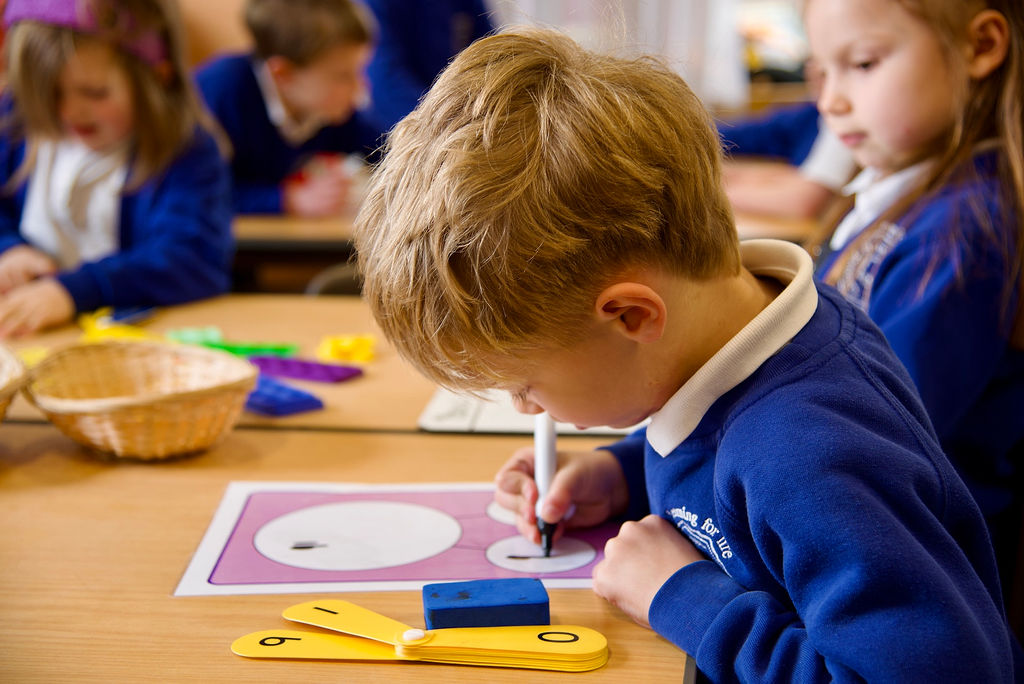
We use a simple, consistent approach to teaching phonics. The children will experience the same classroom routines within each lesson which reduces cognitive load and maximises the chances of success. All children are supported within the lesson to use their new phonic knowledge independently. In every single ELS lesson, children will make the direct application to reading. Lots of opportunities are provided for oral blending, eg, c/oa/t The main focus is on word recognition. However, new vocabulary is also given and explained in every lesson. Opportunities are also given for writing new graphemes, words and sentences.
To fully support their phonics learning, children are only expected to independently read from books that are entirely decodable. We only use pure sounds when decoding words (no ‘uh’ after the sound). We encourage children to practise reading their books at home 4 times across the week working on these skills: decoding, fluency and expression. We assess the children regularly (at least once a half term) on their progress and use this information to identify any gaps in learning. Children will then be targeted with extra revision and practice of any identified gaps in sound knowledge and blending and, where appropriate, take part in specific interventions to ensure any gaps are closed rapidly.
Pupils in Year 2 onwards, who do not yet have a fully secure phonic knowledge, will be further supported through specifically targeted support in class and through interventions to ensure that every child is able to read fluently before they leave primary school.